

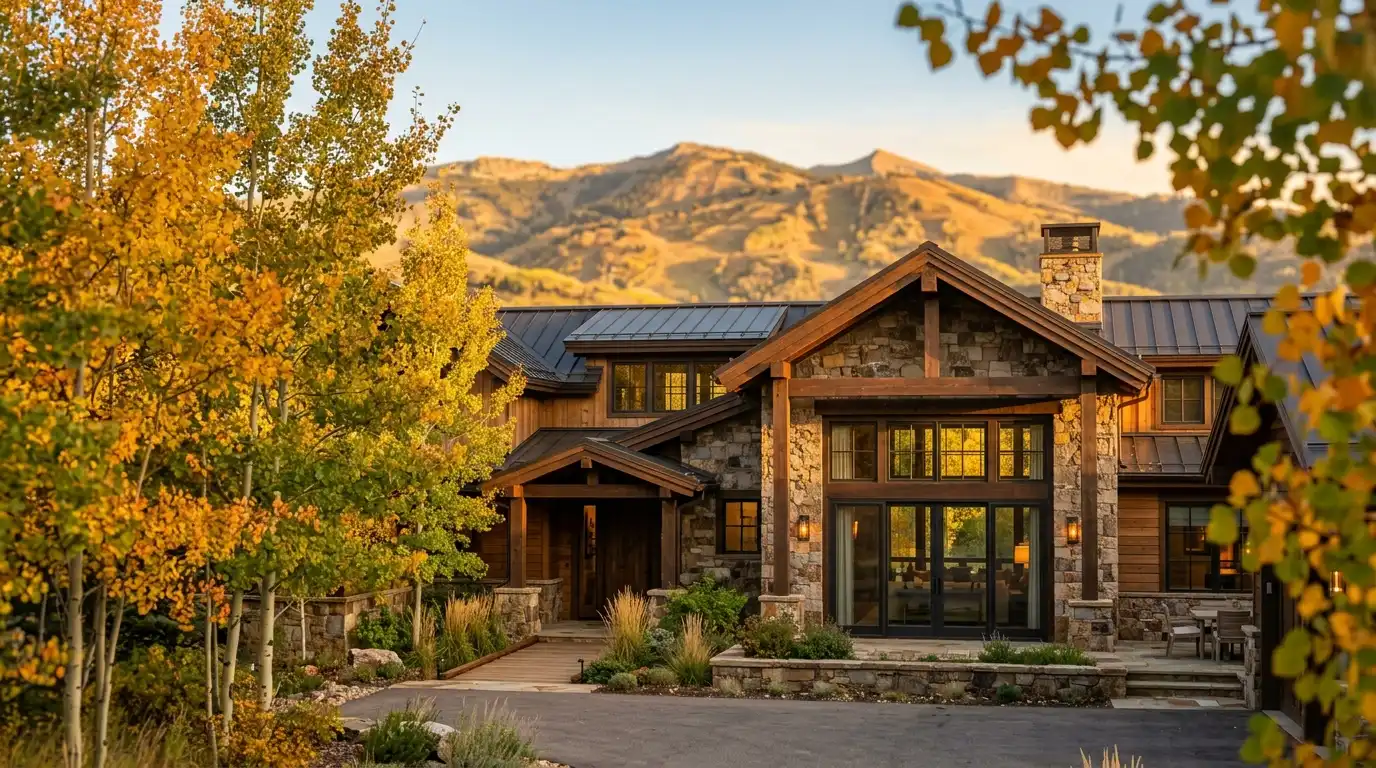
Buying a home in Steamboat Springs as an out-of-area buyer means a 30- to 45-day contract-to-close timeline, a local agent who knows Routt County, jumbo or second-home financing for most price points, and mountain-specific inspections (radon, well and septic, snow load, wildfire). Median single-family prices closed 2025 around $2.09 million.
Most people who buy in Steamboat are not local. They are buying a second home, a future retirement base, or an investment property from somewhere else in the country, and the process is meaningfully different from buying in the suburb they live in now. The price points are higher, the financing is more complex, the inspections cover hazards a flatland buyer has never thought about, and the short-term rental rules can make or break the numbers on an investment purchase. This guide walks through the entire path from first search to closing day in the Yampa Valley. It is written by Cheryl Foote, the number one Steamboat Springs agent for 20 years running and a 30-year resident of the valley, for the buyer who is doing this from a distance and wants to do it right the first time.
The Quick Take: Buying in Steamboat Springs (2026)
- Market: Single-family median closed 2025 near $2.09M; broader Routt County median around $1.2M depending on property type and month
- Buyer profile: Predominantly out-of-area second-home, retirement, and investment buyers
- Financing: Many purchases exceed the 2026 Colorado baseline conforming limit of $832,750, so jumbo or second-home loans are common; plan 10–20% down plus 6–12 months of reserves
- Timeline: Roughly 30–45 days from accepted contract to closing; cash deals can close in 14–21 days
- Inspections: Standard inspection plus radon, well and septic (for rural homes), snow load and roof, and wildfire mitigation
- Short-term rental: Whether you can legally rent depends on the property’s STR Overlay Zone (Green = unlimited, Yellow = capped, Red = not allowed); licenses do not automatically transfer at sale
- Property tax: Colorado uses two residential assessment rates for tax year 2026: 7.05% for school district levies and 6.8% for local government levies, the latter applied after subtracting the lesser of 10% of actual value or $70,000, then multiplied by the local mill levy
- Seasonality: Inventory and showings peak summer and fall; winter brings serious second-home buyers; mud season is the quietest window
Note on figures: Price, tax, and loan-limit figures cited here are 2025–2026 ranges drawn from public sources including the Steamboat Pilot, Routt County, and Colorado mortgage publications. Market data shifts month to month, and tax and STR rules change. Verify current numbers for any specific property with Cheryl Foote before writing an offer.
Buying From Out of Town?
The hardest part of buying in Steamboat from a distance is not finding a house. It is knowing which questions to ask before you fall in love with one. Let the number one Steamboat agent walk you through financing, the STR zones, and the mountain-home inspections before you start touring.
Contact Cheryl FooteThe Steamboat Market an Out-of-Area Buyer Is Walking Into
Steamboat closed 2025 with an unexpected surge. After a slow stretch earlier in the year, buyers stopped waiting for prices to fall and started purchasing the homes they actually wanted. Single-family sales finished 2025 about 2.5% higher than 2024, and of the 161 single-family transactions for the year, 112 closed in the second half. That late-year momentum carried into 2026, which local agents describe as a more balanced market: real demand, mostly reasonable sellers, and healthier inventory than the frantic post-2020 years.
Pricing depends heavily on what you are buying. At the close of 2025 the median sales price for a single-family home in Steamboat Springs was about $2.09 million. The broader Routt County median, which blends in condos and outlying areas, has run closer to $1.2 million in recent months. Mountain Area condos and ski-in/ski-out product trade on their own dynamics, and Old Town single-family homes carry a walkability premium. The headline number you see online is almost never the number that applies to the specific home you want, which is the first reason out-of-area buyers benefit from local representation.
The most important thing to understand about this market is who you are competing with. Steamboat is a destination resort town, so a large share of buyers are not local. They are buying a second home, a retirement plan, or an income property. That means strong, clean offers, frequent cash buyers, and competition that does not depend on the local job market. An out-of-area buyer who is well prepared, pre-underwritten, and represented by a local agent competes on even footing. One who is not prepared loses the good homes.
The Out-of-Area Buyer’s Process, Stage by Stage
Colorado uses a standardized Contract to Buy and Sell Real Estate, written by the Colorado Real Estate Commission, with a set of dates and deadlines that govern the entire transaction. Once you understand that framework, the process from search to keys is predictable. Here is the typical path, with realistic timing for a Steamboat purchase.
| Stage | Typical Timing | What Happens |
|---|---|---|
| 1. Pre-approval and strategy | Before you search | Get pre-underwritten with a lender who handles jumbo and second-home loans; define budget, must-haves, and STR goals with your agent |
| 2. Search and tour | Weeks to months | Curated showings in person or by live video; out-of-state buyers often tour a batch over one or two trips |
| 3. Offer and contract | 1–3 days to negotiate | Submit offer on the state contract; once accepted you reach Mutual Execution of Contract (MEC), which starts every deadline |
| 4. Earnest money | Within ~3 days of MEC | Deposit, usually 1–3% of price, delivered to the title company or escrow holder |
| 5. Inspection | ~7–10 days from MEC | General inspection plus mountain-specific tests (radon, well, septic, roof, wildfire); negotiate repairs or credits |
| 6. Appraisal and title | ~18–21 days from MEC | Lender orders appraisal; title company delivers commitment; review HOA or metro-district documents |
| 7. Loan commitment | ~21–30 days from MEC | Final underwriting; jumbo files may run longer, so build in buffer |
| 8. Closing | ~30–45 days from MEC | Sign at the title company (remote notary available for out-of-state buyers); funds disburse; you receive keys |
A cash purchase compresses this dramatically. With no appraisal or loan deadlines to clear, cash deals in Steamboat frequently close in 14 to 21 days, which is part of why cash buyers win competitive situations. Almost every deadline in the Colorado contract is negotiable, so an experienced local agent can structure your offer to look strong without exposing you to unnecessary risk.
Financing a Second Home or Mountain Property
Financing is where out-of-area buyers most often get tripped up, because Steamboat prices push many purchases past the conforming loan limit and into jumbo territory. For 2026, the baseline conforming limit in most of Colorado is $832,750. Routt County is not one of the ceiling counties like Eagle, Pitkin, or Summit, so a Steamboat purchase above roughly that figure will generally require a jumbo loan or a second-home loan product.
What Jumbo and Second-Home Loans Require
Plan on a down payment of 10% to 20% for most jumbo financing, though well-qualified borrowers can sometimes find 10% options, and a few specialty programs go lower with stricter terms. Beyond the down payment and closing costs, lenders want to see liquid reserves equal to roughly 6 to 12 months of principal, interest, taxes, and insurance. On a $1.5 million home with a $1.2 million loan, that reserve requirement can run well into five or even six figures. Most lenders want a credit score of at least 680, and prefer 700 or higher for larger loan amounts.
A second home that you intend to rent out part of the year adds a wrinkle: how the lender classifies the property (true second home versus investment property) affects both the rate and the down payment. Be honest with your lender about your rental intentions from the start, and choose a lender who actively does business in Colorado resort markets. A Denver-suburb mortgage broker who has never financed a property with a well, a metro district, or an STR overlay designation can stall an otherwise clean deal.
The single best move an out-of-area buyer can make is to get fully pre-underwritten, not just pre-qualified, before touring. In a market with frequent cash competition, a financed buyer who can demonstrate a near-cash level of certainty is far more competitive. Cheryl works with Steamboat lenders who understand jumbo, second-home, and resort-property financing and can have you offer-ready.
Mountain-Home Inspections: What Flatland Buyers Miss
The general home inspection you would order anywhere is necessary in Steamboat but not sufficient. Mountain properties carry hazards that simply do not exist in most suburban markets, and the inspection period is your window to investigate every one of them. Treat the items below as a checklist and budget for the specialist inspections beyond the standard one.
| Inspection Item | Why It Matters in the Yampa Valley |
|---|---|
| Radon | Colorado mountain soils produce elevated radon. The EPA recommends mitigation above 4 pCi/L. A mitigation system is inexpensive relative to the home but should be negotiated during inspection if levels are high. |
| Well (rural homes) | Many homes outside the city use private wells. Order flow/yield testing and a water-quality analysis from a well-water specialist. Confirm the well produces reliably and check Colorado water-rights and well-permit details. |
| Septic | Rural properties rely on septic systems that need pumping and inspection on a regular cycle. Have the tank pumped and inspected before closing and confirm permits and capacity for your intended use. |
| Roof and snow load | Heavy snowfall and long winters cause roof wear, ice damming, and structural stress. Inspect the roof, attic, drainage, and any history of ice-dam damage closely. |
| Wildfire and insurance | Mountain properties carry wildfire risk that affects insurability and premiums. Assess defensible space and exterior clearance, and get an insurance quote during the inspection period, not after. |
| Foundation and drainage | Sloped lots bring drainage concerns, freeze-thaw movement, and the risk of freezing pipes in vacant second homes. Confirm grading and winterization provisions. |
For a second home that will sit empty for stretches, ask specifically about freeze protection: a burst pipe in an unoccupied mountain house in January is a common and expensive surprise. A local inspector and a local insurance agent are both worth their weight here, and Cheryl can point you to professionals who do this every week in Routt County.
Don’t Buy a Mountain Home Without the Right Inspections
Radon, well and septic, snow load, wildfire insurability. Each one can change the math on a purchase, and the inspection window is short. Cheryl coordinates the right specialists so nothing gets missed before your deadlines run.
Contact Cheryl FooteShort-Term Rental Rules Every Investment Buyer Must Check First
If any part of your plan involves renting the home on Airbnb or VRBO, the short-term rental rules are not a detail to sort out later. They are the first thing to verify, because they determine whether your investment thesis is even legal. Steamboat created a Short-Term Rental Overlay Zone and licensing program in 2022, and the city has actively enforced it since, including a 2025 round of violations and a one-time 60-day grace period for certain owners to come back into compliance.
The overlay divides the city into zones. Green (Zone A) allows unlimited short-term rentals. Yellow (Zone B) caps the number of STR units across several subzones, so availability is limited and competitive. Red areas do not permit short-term rentals at all. Two facts catch out-of-area buyers off guard. First, an STR license does not automatically transfer when a property sells; depending on the zone and the prior license status, a new owner may be able to transfer the license or may have to reapply, and in capped zones that is not guaranteed. Second, a property advertised as a successful rental by the seller can lose that ability the moment it changes hands if the license cannot transfer.
Before you fall for a condo or cabin as an income play, confirm its overlay zone, its current license status, whether that license can transfer to you, and the realistic occupancy and revenue for that specific zone and product. The City of Steamboat Springs is the authoritative source for zone boundaries and current rules, and Cheryl tracks the ordinance closely because it is the single most consequential variable in a Steamboat investment purchase. For a deeper treatment of the rules, see the investment property guide linked below.
Property Taxes and Carrying Costs in Routt County
Colorado property taxes are calculated by multiplying the home’s actual value by the residential assessment rate to get an assessed value, then multiplying that assessed value by the local mill levy. For tax year 2026 Colorado applies two residential assessment rates: 7.05% for school district levies, and 6.8% for local government levies. The local government share is calculated after subtracting the lesser of 10 percent of the home’s actual value or $70,000. The mill levy varies by the specific taxing districts a property sits in, so two homes of identical value in different parts of Routt County can owe different amounts.
2025 was a reassessment year, and the Routt County Assessor mailed Notices of Value to all property owners in May 2025. Reassessment can move a property’s taxable value meaningfully, so when you review a listing’s historical tax figure, treat it as a starting point rather than your future bill. Ask for the current mill levy and assessed value for the exact property, and factor the result into your monthly carrying cost alongside insurance, HOA or metro-district fees, and any STR licensing and management costs. Compared with high-tax states, Colorado property taxes are relatively moderate, which is part of the appeal for relocating buyers, but the precise number depends entirely on the parcel.
Seasonal Timing: When to Buy in Steamboat
Steamboat’s market has a rhythm, and understanding it helps an out-of-area buyer decide when to engage. Inventory and showing activity generally build through summer and into fall, when the valley is at its most accessible and homes show their landscaping and views at their best. Winter brings a different buyer: serious second-home shoppers who are in town to ski and who often move quickly and pay cash. Mud season, the shoulder weeks between winter and summer, is the quietest stretch, which can mean less competition for a patient buyer but also thinner inventory.
There is no single right answer. A buyer focused on selection should lean toward the summer and fall inventory peak. A buyer focused on negotiating leverage may find more room in the off-season. What matters more than the calendar is being prepared: pre-underwritten, clear on your STR and inspection requirements, and represented locally, so that when the right home appears in any season you can act before someone else does.
Out-of-Area Buyer Readiness Checklist
- Get pre-underwritten with a lender experienced in jumbo and second-home loans for Colorado resort markets.
- Confirm reserves. Beyond down payment and closing costs, expect to document 6–12 months of housing-payment reserves.
- Define your STR goals up front so your agent only shows you homes in zones that support them.
- Budget for specialist inspections: radon, well, septic, roof, and a wildfire-aware insurance quote.
- Verify the real tax number for the specific parcel post-reassessment, not the old listing figure.
- Line up remote-closing logistics in advance if you cannot be in Steamboat on closing day.
Buy in Steamboat With the Valley’s Most Experienced Agent
Cheryl Foote has been the number one Steamboat Springs agent for 20 years and has lived in the Yampa Valley for 30. She has guided more out-of-area buyers through financing, the STR zones, mountain inspections, and resort-market timing than anyone in town. Whether you are buying a second home, a retirement base, or an investment property, start with the agent who knows this valley from the inside.
Contact Cheryl FooteFrequently Asked Questions: Buying in Steamboat Springs
What is the average price of a home in Steamboat Springs in 2026?
At the close of 2025, the median single-family home price in Steamboat Springs was approximately $2.09 million, and the broader Routt County median, which includes condos and outlying areas, has run closer to $1.2 million in recent months. Prices vary widely by property type and location: Mountain Area ski condos, Old Town single-family homes, and rural acreage all trade on different dynamics. The headline median rarely matches the price of any one specific home, so ask Cheryl Foote for current comparable sales for the exact area and property type you are targeting.
How long does it take to buy a home in Steamboat Springs?
A financed purchase in Steamboat typically takes about 30 to 45 days from an accepted contract to closing, following the Colorado Contract to Buy and Sell deadlines: earnest money within roughly three days, inspection around 7 to 10 days, appraisal around 18 to 21 days, and loan commitment around 21 to 30 days from mutual execution. A cash purchase can close in 14 to 21 days because it skips the appraisal and loan deadlines. Jumbo financing can run slightly longer, so build in buffer.
Do I need a jumbo loan to buy in Steamboat Springs?
Often, yes. The 2026 baseline conforming loan limit in most of Colorado, including Routt County, is $832,750. Because many Steamboat homes sell above that figure, purchases frequently require a jumbo loan or a second-home loan product. Plan on 10% to 20% down for most jumbo programs, a credit score of 680 or higher (700-plus preferred for larger amounts), and liquid reserves of roughly 6 to 12 months of housing payments. Work with a lender experienced in Colorado resort-market and second-home lending.
Can I buy a home in Steamboat Springs and use it as a short-term rental?
It depends entirely on the property’s Short-Term Rental Overlay Zone. Green (Zone A) allows unlimited short-term rentals, Yellow (Zone B) caps the number of STR units across its subzones, and Red areas do not allow them. An STR license does not automatically transfer when a property sells; depending on the zone and the prior license status you may be able to transfer it or may have to reapply, which is not guaranteed in capped zones. Always confirm the zone, the current license status, and whether the license can transfer before relying on rental income in your purchase math.
What inspections do I need for a mountain home in Routt County?
Beyond the standard general inspection, plan for mountain-specific items: a radon test (Colorado mountain soils often produce elevated radon, with mitigation recommended above 4 pCi/L), well flow and water-quality testing plus a septic pump-and-inspection for rural homes, a careful roof and snow-load review for ice damming and structural stress, and a wildfire and insurability assessment including defensible space. For second homes that sit empty, confirm freeze protection for pipes. Schedule these specialists early because the Colorado inspection window is typically only 7 to 10 days.
How much are property taxes in Routt County, Colorado?
Colorado property tax is calculated by multiplying the home’s actual value by the residential assessment rate to reach an assessed value, then multiplying that by the local mill levy, which varies by taxing district. For tax year 2026 Colorado uses two residential rates: 7.05 percent for school district levies and 6.8 percent for local government levies, with the local government share applied after subtracting the lesser of 10 percent of actual value or $70,000. Because 2025 was a reassessment year with new Notices of Value mailed in May 2025, the historical tax figure on a listing may not reflect your future bill. Compared with many high-tax states, Colorado property taxes are relatively moderate, but always confirm the current mill levy and assessed value for the specific parcel.
Can I buy a home in Steamboat from out of state without traveling there?
Yes. Many Steamboat buyers are out of area and complete much of the process remotely. Your agent can run live video tours, the inspection and appraisal happen locally, and Colorado allows remote notarization so you can sign closing documents from your home state. The keys to buying well from a distance are getting fully pre-underwritten before you search, being decisive when the right home appears, and relying on a local agent to manage inspections, contractors, and deadlines on the ground. Cheryl Foote has guided many out-of-state buyers through exactly this process.
When is the best time of year to buy in Steamboat Springs?
Inventory and showing activity generally peak in summer and fall, giving buyers the most selection. Winter brings serious second-home buyers who are in town to ski and who often move quickly and pay cash. Mud season, the shoulder weeks between winter and summer, is the quietest stretch and can offer more negotiating room but thinner inventory. There is no universally best month; what matters most is being prepared and represented locally so you can act when the right home appears in any season.
Social Cookies
Social Cookies are used to enable you to share pages and content you find interesting throughout the website through third-party social networking or other websites (including, potentially for advertising purposes related to social networking).